A new gadget can make a surprisingly convincing first impression.
The screen looks beautiful. The packaging feels thoughtful. The setup process is smooth. For the first few days, you find reasons to use it simply because it's new.
Then ordinary life returns.
The gadget needs charging. An app requires another login. The device takes up space on your desk. Something that seemed effortless in a demonstration turns out to require three extra steps.
And you begin to wonder whether you actually needed it.
That's why I think gadget reviews should answer a question that specifications and first impressions often miss:
Does this product make everyday life meaningfully easier after the excitement wears off?
The 30-Day Rule is a practical way to answer that question.
Instead of deciding whether a gadget is essential during the first weekend, evaluate it across several weeks of normal use.
You don't need laboratory equipment, complicated scoring software, or a professional testing setup.
You need a clear reason for buying the product, a few realistic tasks, and enough attention to notice whether it helps.
Why the First Week Can Be Misleading
New technology gets a temporary advantage.
You're curious about it. You're more willing to learn its features. You may even rearrange your routine to make room for it.
That doesn't necessarily mean the product is bad.
It means the first few days are an unusual environment in which to judge its long-term value.
Consider a new smartwatch.
During the first week, you might explore every notification, customize the watch face, and check the activity dashboard repeatedly.
A month later, the relevant questions may be different.
Are the notifications useful or distracting?
Is charging convenient?
Do you actually use the features that influenced your purchase?
Would you miss the watch if you stopped wearing it?
These questions tell you more about personal value than the excitement of opening the box.
The same principle applies to wireless earbuds, smart-home devices, tablets, desk accessories, and countless other purchases.
What the 30-Day Rule Actually Means
The 30-Day Rule is simple:
Don't call a gadget essential until you've evaluated how it fits into ordinary life over approximately 30 days.
This is an editorial decision framework, not a scientifically validated testing period.
Thirty days is a convenient window for observing repeated use, maintenance, and changes in enthusiasm.
Some products need a shorter evaluation. Others require longer-term observation.
The point isn't to reach a magical number.
It's to avoid confusing an impressive demonstration with lasting usefulness.
The four questions that matter
Throughout the evaluation, keep returning to these questions:
Usefulness: Does the gadget solve a real problem?
Reliability: Does it work consistently enough to trust?
Friction: Does it remove more effort than it creates?
Value: Is the improvement worth the total cost?
A product doesn't need to be perfect.
It needs to earn its place.
Before Day 1: Define the Problem You're Trying to Solve

The most important part of testing happens before you start.
Write down why you're considering the gadget.
Not its advertised features.
Your actual problem.
For example:
"I need headphones that make work calls easier to hear."
"I want a more comfortable way to read long documents."
"I need better lighting for my desk."
"I want to control a frequently used lamp without walking across the room."
These statements give you something concrete to evaluate.
Now define what improvement would look like.
If you're testing headphones, that might mean comfortable use during your typical calls and dependable connections.
If you're testing a tablet, it might mean completing reading and annotation tasks more comfortably than on your existing device.
If you're testing a smart plug, it might mean reliable control without frequent troubleshooting.
Compare it with what you already own
A gadget shouldn't be evaluated only against its marketing promises.
It should also be compared with the tools you already use.
Ask:
Can my current device handle this task?
Is the new product noticeably easier?
Does it replace something or add another thing to maintain?
Would a less expensive accessory solve the same problem?
Sometimes the best result of a test is realizing that you didn't need another device.
Days 1–3: Test Setup and First Impressions
The first three days are about understanding the initial cost of using the product.
Not just the purchase price.
The effort required to get it working.
Pay attention to:
Setup time and difficulty
Account or app requirements
Compatibility with your existing devices
Permissions requested
Initial reliability
Physical comfort
Charging or power requirements
A gadget that works immediately may deserve credit for a simple setup.
A device that requires several accounts and complicated configuration should have a clear reason for that complexity.
Don't confuse learning effort with permanent friction
Some products take time to learn but become easier with familiarity.
Others remain inconvenient because the workflow itself is poorly suited to your needs.
Try to distinguish between the two.
If you don't understand a feature yet, give yourself a reasonable opportunity to learn it.
If a task continues to require unnecessary steps after you understand the product, that may be a genuine drawback.
Record your first impression
Write a few short notes.
What worked?
What was confusing?
What surprised you?
Keep the notes factual.
You'll return to them later to see which impressions lasted.
Days 4–10: Use It During Ordinary Tasks
This is where the evaluation becomes more interesting.
Stop looking for reasons to use the gadget.
Instead, let your normal routine determine whether it belongs.
If you bought a tablet for reading, use it when you would ordinarily read.
If you bought a smart-home device for convenience, notice whether you naturally reach for it.
If you bought a portable charger, pay attention to whether it solves the situations that motivated the purchase.
Don't invent special activities simply to justify owning the product.
Watch for the extra steps
A gadget may save effort in one place while adding it somewhere else.
For example, a device might make one task faster but require frequent charging, updates, or connection troubleshooting.
Those costs matter.
A useful evaluation asks whether the entire experience improves, not just the most impressive moment.
Keep a simple friction log
You don't need detailed analytics.
A few entries are enough.
Situation | What happened | Did the gadget help? |
|---|---|---|
Normal task | Describe what you were trying to do | Yes / Partly / No |
Unexpected problem | Note any interruption or failure | Yes / Partly / No |
Maintenance | Record charging, setup, or troubleshooting | Easy / Manageable / Frustrating |
The table is a blank recording template, not data from an actual product test.
Focus on patterns rather than isolated annoyances.
One minor problem doesn't automatically make a product a bad purchase.
Repeated friction deserves more attention.
Days 11–20: Look for Reliability and Maintenance Costs

By the middle of the evaluation, the novelty may be less important.
Now pay attention to consistency.
Does the device behave predictably?
Do you trust it to work when needed?
Are software updates, charging, cleaning, or accessories becoming a burden?
For a wireless accessory, reliability may involve connection stability.
For a smart-home product, it may involve dependable responses and how the device behaves when the network is unavailable.
For a laptop accessory, it may involve comfort and compatibility throughout a normal workday.
Different gadgets need different tests.
Think beyond the device itself
A purchase may introduce ongoing requirements:
Replacement batteries or charging accessories
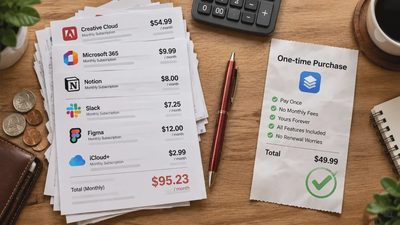
Paid software or cloud services
Proprietary accessories
App accounts
Firmware updates
Storage space
Repairs or eventual replacement
These aren't automatically reasons to reject a product.
But they belong in the evaluation.
A device with an attractive purchase price may be less appealing if it depends on an ongoing service you don't want.
Consider repairability and support
Look for information about warranty coverage, available replacement parts, manufacturer support, and repair options.
You may not need to repair the gadget during the evaluation.
But you should understand what happens if something fails.
A product that is difficult or uneconomical to maintain may be a poor fit for someone who wants technology to last.
Days 21–30: Decide Whether You Would Buy It Again
The final stage is about value.
By now, you should have a clearer sense of how often the gadget helps and how much effort it requires.
Ask yourself:
Am I still using it for the reason I bought it?
Has it become part of my routine naturally?
Does it solve a problem better than my previous setup?
Would I notice its absence?
Are the maintenance requirements reasonable?
Would I recommend it to someone with the same needs?
Knowing what I know now, would I buy it again?
That last question is particularly useful.
It separates the decision you made before purchasing from the decision you would make with more experience.
Three possible verdicts
Keep it. The gadget solves a meaningful problem, works reliably, and adds less friction than it removes.
Keep it, but don't call it essential. You enjoy the product, but it isn't necessary or especially valuable for your routine.
Return, resell, or stop using it. The benefit doesn't justify the cost or complexity.
Not every enjoyable purchase needs to be essential.
A gadget can be a perfectly reasonable luxury.
The problem begins when we describe something as indispensable simply because we like having it.
Important: Don't Let the 30-Day Rule Override the Return Policy
A 30-day evaluation is not a reason to miss a return deadline.
Retailers and manufacturers have different return windows, conditions, and exclusions.
Some may be shorter than 30 days.
Others may have special rules for opened electronics, accessories, or holiday purchases.
Before buying, check the actual return policy.
Record the final date for returning the product.
If the return window is shorter than your preferred evaluation period, make the keep-or-return decision before that deadline.
You can continue assessing long-term usefulness afterward, but don't assume you'll still be eligible for a refund.
Also check whether a free trial or subscription will renew automatically.
A sensible testing framework should protect your options, not accidentally cost you money.
How to Read Gadget Reviews Without Getting Misled
Professional tech reviews can be useful.
Reviewers may examine display quality, battery behavior, compatibility, performance, build quality, and other characteristics that are difficult for an individual buyer to evaluate.
But even a detailed review cannot fully predict how a product will fit your life.
The key is to understand what a review actually establishes.
Look for the testing method
Good gadget reviews should explain what was evaluated and how.
For example:
Was the product tested or merely described?
What tasks were used?
How long was it used?
Were measurements taken?
What equipment or conditions were involved?
Were important limitations disclosed?
A review that explains its method gives you more information than one that relies on enthusiastic adjectives.
Separate facts from preferences
Some findings are relatively concrete.
A device's dimensions, port selection, or supported connectivity can often be checked against official specifications.
Other conclusions depend on personal preference.
A reviewer may find a keyboard comfortable while another person dislikes its feel.
A smartwatch interface may seem intuitive to one user and distracting to another.
Treat subjective judgments as useful perspectives, not universal facts.
Pay attention to the reviewer's use case
A product may be excellent for someone who travels frequently but unnecessary for a person who works from home.
A powerful laptop may suit demanding creative applications while offering little practical advantage for basic web browsing and documents.
Ask whether the reviewer's priorities resemble yours.
If not, adjust the recommendation accordingly.
What Tech Reviews and Ratings Can—and Can't—Tell You
Star ratings are convenient because they reduce a complicated decision to a single number.
But that simplicity has limits.
A high score doesn't necessarily mean a product is right for you.
And a low score doesn't always mean it is unsuitable for your particular needs.
Read beyond the average rating
When looking at tech reviews and ratings, pay attention to the reasons behind the scores.
Look for recurring comments about reliability, comfort, compatibility, customer support, and long-term ownership.
A single complaint may reflect an unusual situation.
Repeated reports of the same issue may deserve closer investigation.
However, online customer reviews can include selection bias, incomplete information, and unreliable or manipulated submissions.
Treat patterns as signals to investigate, not definitive proof.
Check review dates
Technology changes.
Software updates may alter behavior.
Compatibility requirements can shift.
Prices and competing products may change the value calculation.
A review can be accurate for the product and software version it examined while becoming less useful later.
Check when the review was published and whether important details remain current.
Watch for incentives
Some reviews contain affiliate links, sponsorships, or other commercial relationships.
Those relationships do not automatically invalidate a review.
But clear disclosures matter.
Look for transparent testing methods, balanced discussion, and acknowledgment of weaknesses.
A credible reviewer should be able to explain why someone might not want the product.
A Simple Gadget Review Scorecard
If you prefer a structured decision, use the following categories.
Rate each one from 1 to 5 based on your own experience.
Category | Question | Your score |
|---|---|---|
Usefulness | Does it solve the original problem? | ___ / 5 |
Reliability | Does it work consistently? | ___ / 5 |
Ease of use | Is it comfortable and straightforward? | ___ / 5 |
Maintenance | Is ongoing care manageable? | ___ / 5 |
Value | Is the benefit worth the total cost? | ___ / 5 |
Don't treat the total as a scientific measurement.
These are personal judgments, not laboratory results.
And not every category deserves equal importance.
For a device you depend on during work, reliability may matter much more than appearance.
For an occasional convenience gadget, cost and maintenance may be more important.
Use the scorecard to clarify your thinking, not to manufacture precision.
Three Questions to Ask Before Buying Any New Gadget
The 30-Day Rule works best when paired with restraint before purchasing.
1. What specific problem will this solve?
If you can't describe the problem clearly, consider waiting.
You may simply be interested in the product.
That's not inherently wrong, but it's different from needing it.
2. What happens if I don't buy it?
Can you continue comfortably with what you already own?
Could a small repair, software adjustment, or inexpensive accessory address the issue?
Sometimes the most sensible upgrade is no upgrade.
3. How will I know whether it was worth buying?
Define your success criteria before the excitement of ownership influences your judgment.
That makes the eventual decision more useful.
Frequently Asked Questions
Is 30 days enough to test a gadget?
Thirty days can be a useful period for observing everyday usefulness, reliability, and maintenance. It isn't a universal testing standard. Some products require longer-term evaluation, while return policies may require a decision sooner.
What should I look for in gadget reviews?
Look for clear testing methods, relevant use cases, balanced discussion of weaknesses, review dates, and transparent commercial disclosures. Consider whether the reviewer's priorities match your own.
Are tech reviews and ratings reliable?
They can provide useful information, but no single score tells the whole story. Read the underlying observations, consider the testing context, and look for consistent patterns across credible sources.
Should I keep a gadget if I rarely use it?
That depends on its purpose. An emergency tool may be valuable despite infrequent use. For an everyday convenience gadget, consistently low use may suggest that it isn't worth the cost or maintenance.
What if I enjoy a gadget but don't need it?
Enjoyment is a legitimate reason to own something if the cost fits your priorities. Just distinguish between a purchase you enjoy and one you consider essential.
The Real Test Happens After the Excitement
The first impression of a new gadget can be delightful.
There's nothing wrong with enjoying that.
But the decision to keep a device, recommend it, or call it essential deserves a little more thought.
Give the product a real job.
Use it in your normal routine.
Notice the extra steps, the maintenance, and the moments when it genuinely helps.
Read professional reviews for context, but don't let someone else's rating replace your own priorities.
And make your return decision before the actual deadline.
A good gadget should earn its place through repeated usefulness, not just a convincing first impression.
The best technology isn't always the most exciting thing you buy. It's the thing that continues to make sense after the excitement is gone.