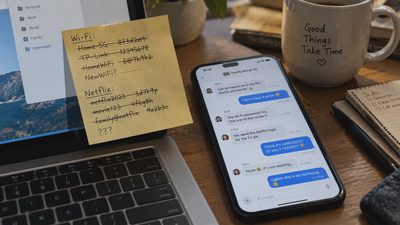

Why This Blog Exists: Technology Should Reduce Friction, Not Create More of It
Technology is supposed to make life easier.
That is the promise: fewer steps, faster answers, better communication, and more time for the things that matter.
Sometimes technology delivers. Other times, it gives us another password to remember, another subscription to manage, another notification to dismiss, and another “simple” system that needs a weekend of setup before it becomes useful.
That tension is why I started Tech Without Friction.
I Helped Build the Digital World
For nearly a decade, I worked as a senior product manager at a major consumer-technology company in Silicon Valley. My work involved building apps, managing software releases, evaluating new features, and trying to understand what made technology useful, engaging, and easy to adopt.
I saw how products take shape behind polished launch announcements.
A feature may begin as a genuine attempt to solve a user problem. But along the way, product decisions can also become shaped by engagement, recurring revenue, growth metrics, and competitive pressure.
Those goals are not automatically wrong. Technology companies need sustainable businesses, and teams need measurable outcomes. But those priorities do not always make everyday life simpler.
A tool can be impressive and inconvenient at the same time. An app can be powerful and still demand too much attention. An AI feature can save time in one situation while creating more checking, correcting, and managing in another.
The launch announcement rarely tells you that part.
The Problem Is Not Technology Itself

I am not here to tell you to abandon your phone, delete every app, or return to a fictional life without crowded inboxes.
Technology is useful. I rely on it every day to work, communicate with family, organize projects, find information, navigate unfamiliar places, and learn.
The problem is not that we use technology.
The problem is technology that asks more from us than it gives back.
Friction appears when a tool:
Requires constant maintenance to remain useful
Adds notifications instead of removing decisions
Locks basic features behind another monthly payment
Collects more personal information than the task requires
Makes a simple job feel like a technical project
Encourages us to buy a solution before we understand the problem
Creates more anxiety than clarity
A product can be well designed and still be the wrong fit for your life.
The important question is not simply:
What can this technology do?
The better question is:
What will it be like to live with?
When Convenience Becomes Another Responsibility

Many products are called convenient because they automate one particular task. But convenience is not only about the number of clicks saved.
A smart-home device may turn off the lights automatically, but it may also need updates, troubleshooting, account management, and a stable internet connection.
A productivity app may organize your tasks beautifully, but it may also become another place you need to check every morning.
An AI assistant may draft an email in seconds, but you may still need to verify its facts, correct its tone, remove sensitive information, and decide whether it sounds like something you would actually say.
That does not make these tools useless. It means the full cost of a tool includes more than its purchase price.
The real cost may include:
Setup and learning time
Maintenance
Privacy
Attention
Subscription fees
Dependence on a particular platform
The effort required to recover when something stops working
A tool is not truly convenient if it saves five minutes today and creates an hour of maintenance next month.
What Tech Without Friction Is Here to Do
Tech Without Friction is a place for clear, grounded technology advice. The goal is not to chase every launch or declare a universal winner. It is to help readers make better decisions with less confusion.
The site focuses on four connected areas.
Real-World Technology Reviews
A product page tells you what a device is designed to do. A useful review should tell you what it is like to use on an ordinary Tuesday.
I will look at setup, reliability, privacy, maintenance, total cost, and the small annoyances that rarely appear in a specification sheet.
A product does not have to be perfect to be useful. It does need to be honest about its trade-offs.
The question is not whether a gadget has impressive features. The question is whether those features improve the way you actually live.
AI Without the Theater
AI is becoming part of work, education, creative projects, and household tasks. But the conversation often swings between exaggerated promises and exaggerated fear.
I am interested in the middle: specific workflows that save time, limitations that matter, and situations where a checklist, spreadsheet, or thoughtful human conversation is still the better tool.
You do not need to use AI for everything. You do not need to understand every new model. You do need to know which problems AI can help solve, where it tends to fail, and where human review remains necessary.
Digital Peace
A calmer digital life is not the same thing as a completely offline life.
It may mean turning off notifications that do not deserve immediate access to your attention, cleaning up subscriptions, improving your family password system, or making your home network easier to understand.
It may mean removing an app instead of searching for a better version of the same distraction.
The goal is not to use less technology simply for the sake of using less. The goal is to make the technology you keep more intentional.
The Sensible Stack
Most people do not need more individual tools. They need a set of tools that work together without creating unnecessary complexity.
A sensible technology stack may be less exciting than the newest setup on social media. That is fine. It should be reliable, affordable, understandable, and appropriate for the people who actually have to use it.
The best purchase is sometimes the one that prevents three future purchases.
What I Will Not Do
I will not publish a “best product” list without explaining how the products were evaluated.
I will not accept sponsorship that allows a company to control the conclusion.
I will not create AI panic to attract clicks, and I will not claim that everyone must use AI to keep up.
I will not recommend an expensive setup without explaining who needs it, who does not, and what a more affordable option can do.
I will not pretend that a product is easy simply because its marketing says it is.
Technology advice should respect your:
Time
Money
Attention
Privacy
Ability to make your own decisions
If a product is useful, I will explain why. If it is overhyped, I will say so. If the answer depends on your situation, I will explain the decision instead of pretending there is one universal winner.
A Life Beyond the Screen
I live in Bellingham, Washington, with my spouse and our energetic child.
On weekends, I try to spend less time online and more time hiking Pacific Northwest trails, roasting specialty coffee, building mechanical keyboards, or working with wood.
Those activities are not an escape from technology so much as a reminder of its proper place.
A mechanical keyboard is interesting because of how it feels under your hands—not because it gives you another dashboard to monitor.
Coffee is rewarding because it requires patience and attention. Woodworking makes it obvious when you are rushing. A trail does not care how many notifications you have waiting.
Technology is part of life. It is not the whole of life.
The Standard for Every Recommendation
Before recommending a device, app, or workflow, I want to answer five questions:
1. What problem does it solve?
2. Who is it actually for?
3. What does it cost in money, time, attention, and privacy?
4. What are its important limitations?
5. Will it still feel useful after the novelty wears off?
These questions will guide everything published here, from an AI workflow to a home-office setup to a simple privacy checklist.
They will not produce perfect answers every time. Technology is too dependent on context for that. But they can produce better questions, clearer trade-offs, and more useful decisions.
Make the Technology Earn Its Place
Tech Without Friction exists to help you find useful technology without taking on unnecessary complexity.
You do not need the newest device. You do not need the most expensive setup. You do not need an app for every problem.
You need tools that fit your life, respect your attention, and provide enough value to justify the cost of living with them.
That is the purpose of Tech Without Friction: to help you reduce the noise, understand the trade-offs, and make technology earn its place in your life.
— Caleb